Recent studies and analyses by Trajecta:
- The Tradeoffs a Benchmark Score Can Hide
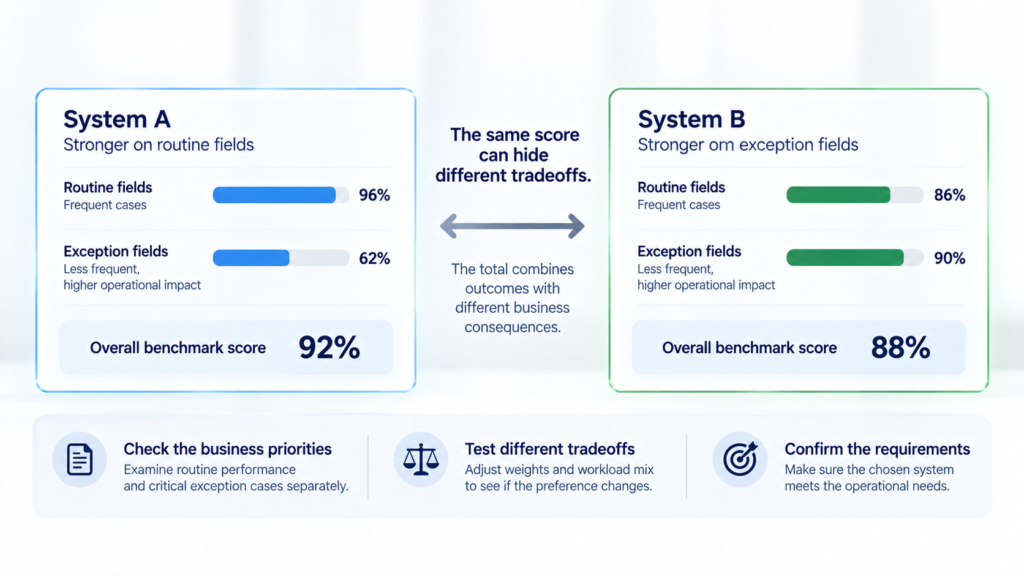 An overall result can conceal where performance improves and where it deteriorates. Evaluation becomes more useful when business priorities remain visible alongside the score. What the total combines Imagine two… Read more: The Tradeoffs a Benchmark Score Can Hide
 - The Better Product That Made Tuesday Worse
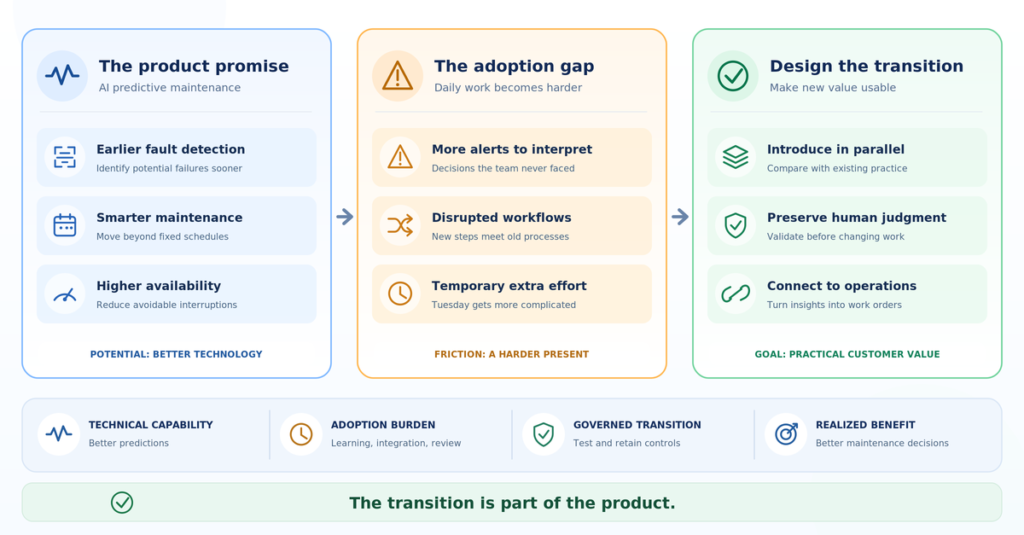 Innovation often promises a better future while requiring customers to endure a more difficult present. For companies developing AI-enabled products and services, competitive advantage may depend not only on the… Read more: The Better Product That Made Tuesday Worse
 - The Strategy Between the Roadmaps
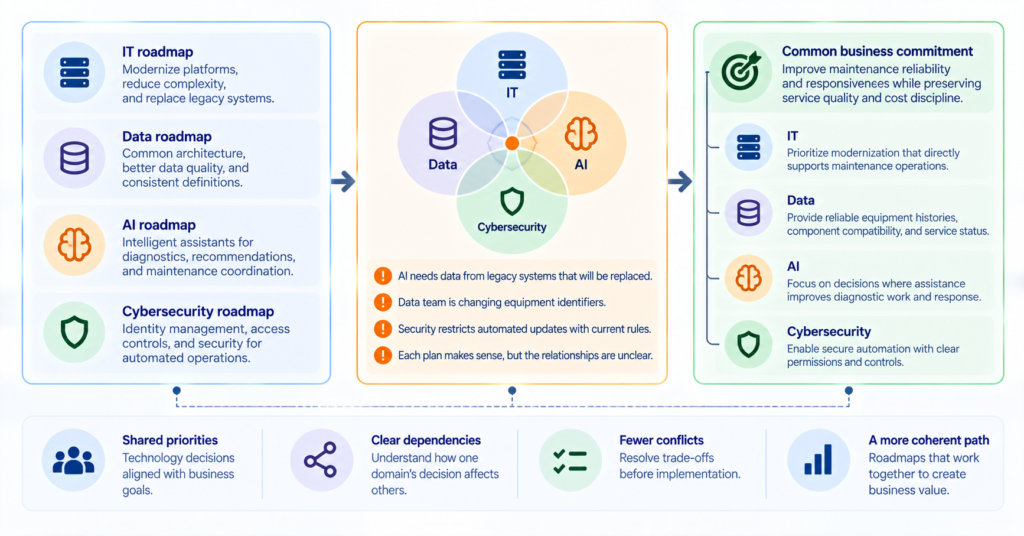 Enterprise technology strategy is becoming more difficult because IT, data, cybersecurity, and artificial intelligence increasingly evolve through different priorities, investment cycles, and operating assumptions. The challenge for business leaders is… Read more: The Strategy Between the Roadmaps
 - The Queue After the Shortcut
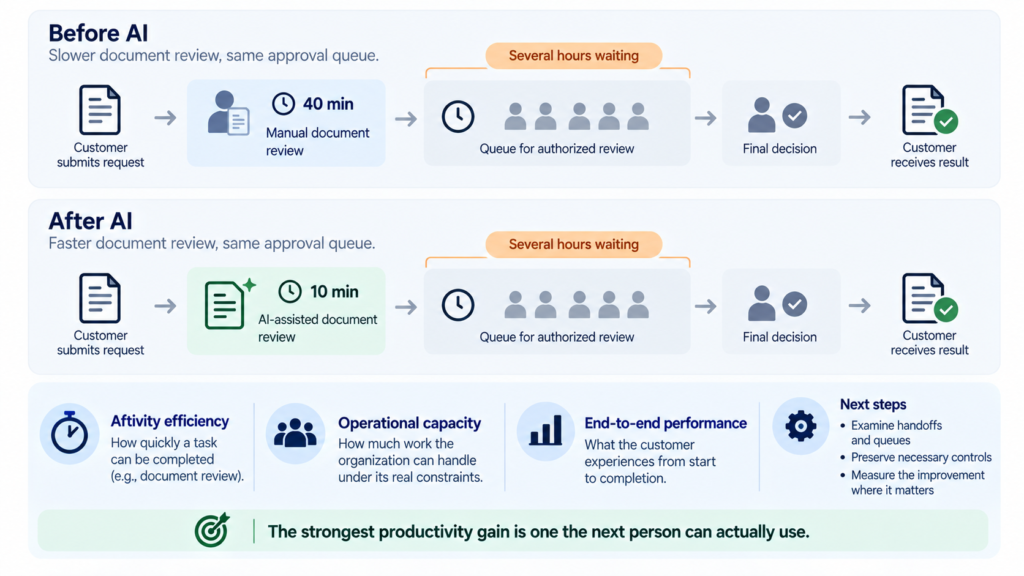 Automation can make individual activities significantly faster without reducing the time required to deliver a complete service. The strategic value of productivity improvements depends on whether the time saved can… Read more: The Queue After the Shortcut
 - The Decision That Could Wait
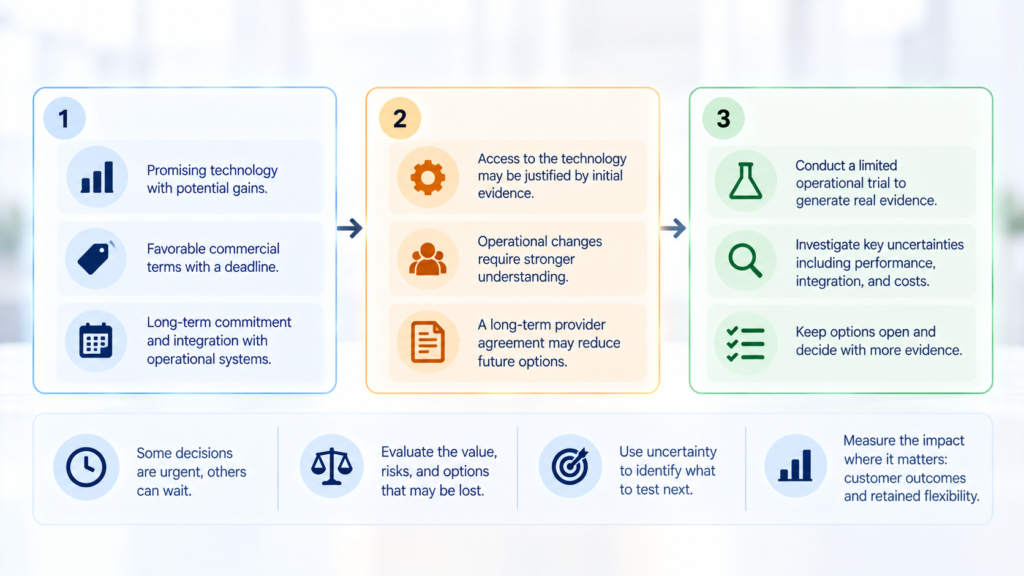 Wisdom in business is not simply the ability to make better decisions with more information. It is also the ability to recognize which decisions must be made now, which commitments… Read more: The Decision That Could Wait
 - A Decision Can Move While the Explanation Stays Open
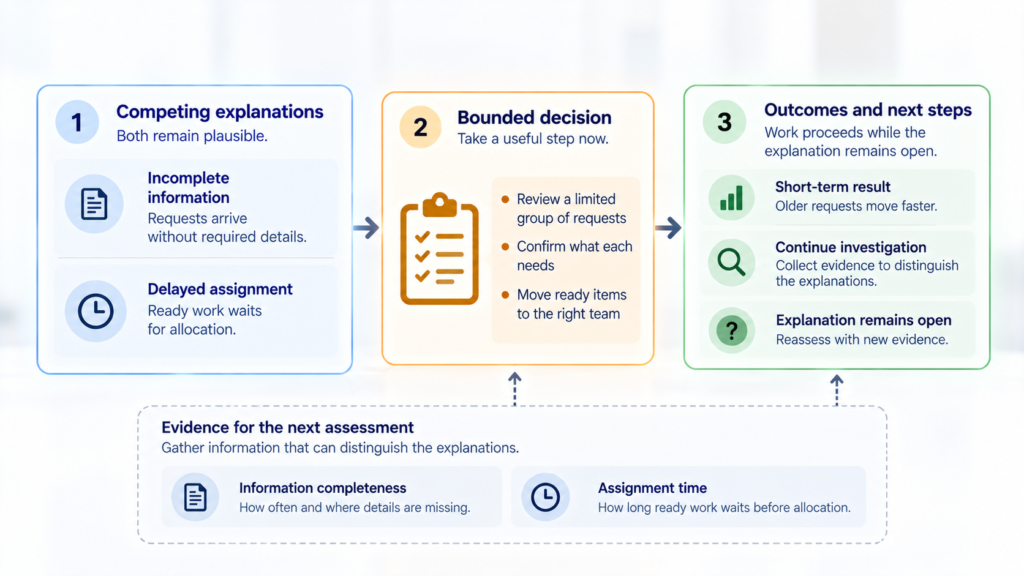 A team can lack sufficient evidence to settle a cause while still having grounds for a limited action. Keeping those questions separate allows useful work to proceed without presenting an… Read more: A Decision Can Move While the Explanation Stays Open
 - Human Contribution Beyond Manual Execution
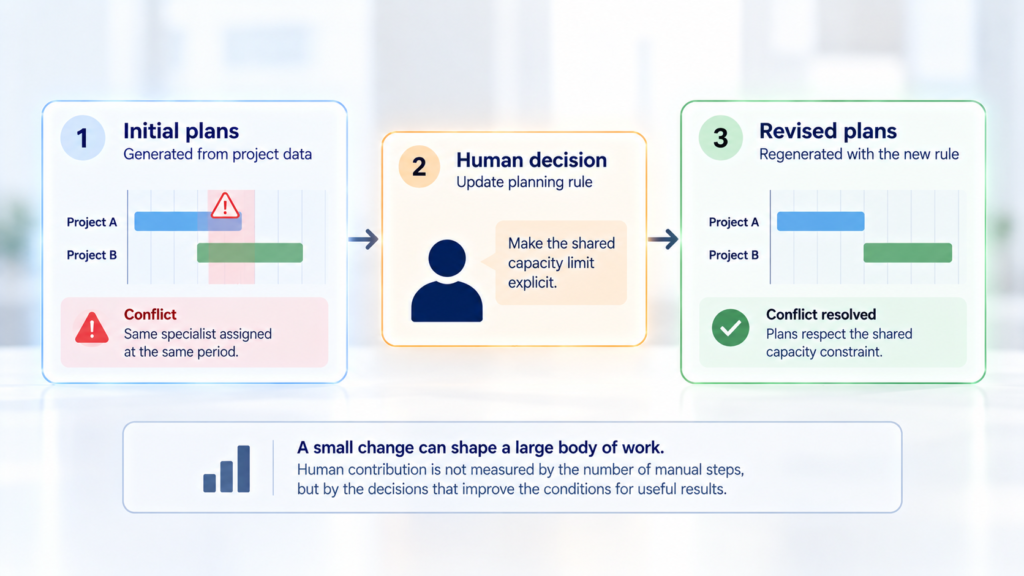 When AI performs the visible steps, human contribution can become harder to recognize. A useful account connects a person’s decisions to the outcomes they helped shape. An activity record can… Read more: Human Contribution Beyond Manual Execution
 - Banking After the Button
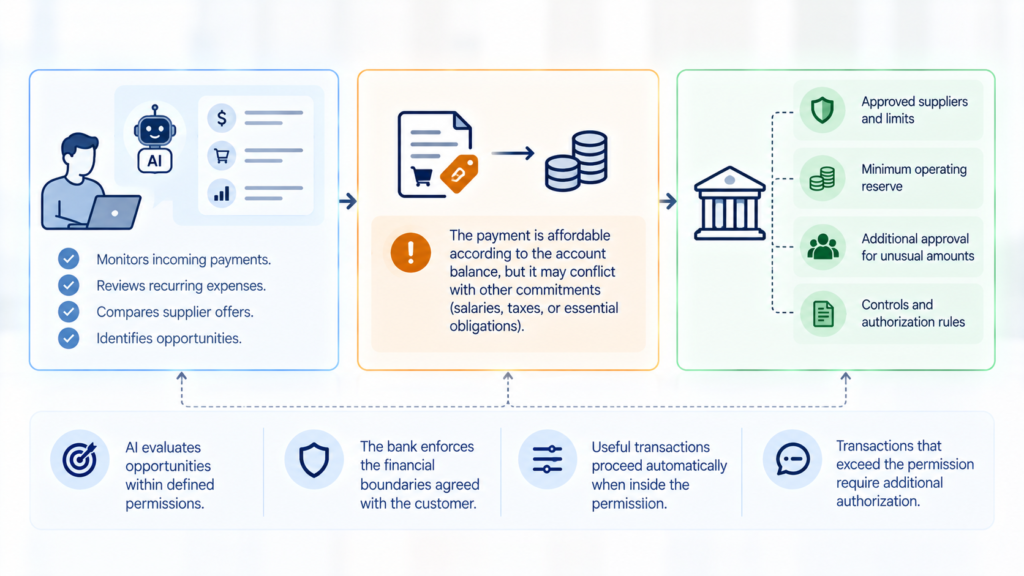 The future of banking may be shaped less by how easily customers can initiate transactions and more by how intelligently financial institutions protect the decisions made on their behalf. As… Read more: Banking After the Button
 - A Recommendation Must Remain Open to Challenge
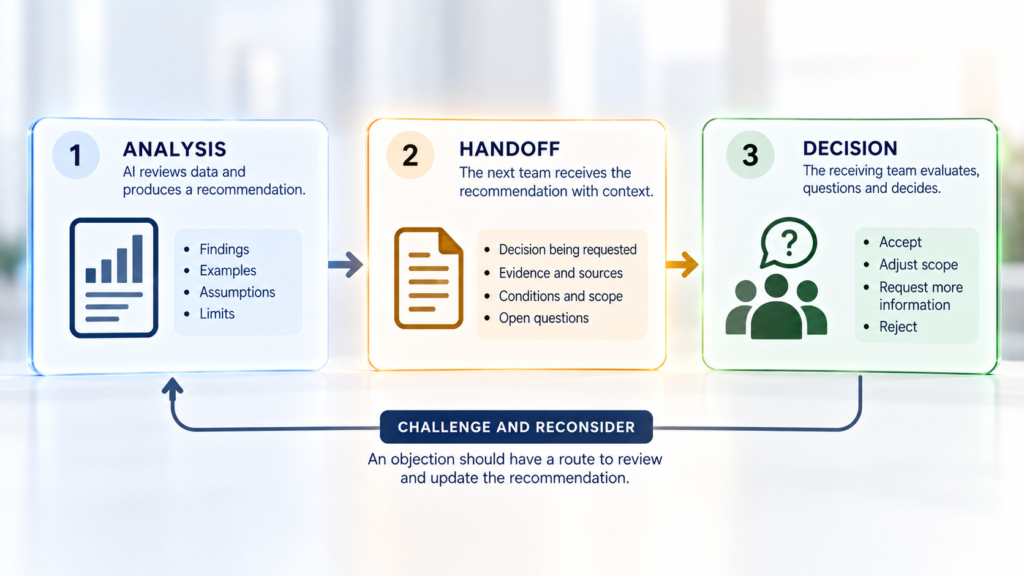 An AI recommendation can reach another team with its conclusion intact and its assumptions missing. A useful handoff preserves enough evidence, scope, and ownership for the next decision maker to… Read more: A Recommendation Must Remain Open to Challenge
 - Use Synthetic Customers to Find the Next Real Test
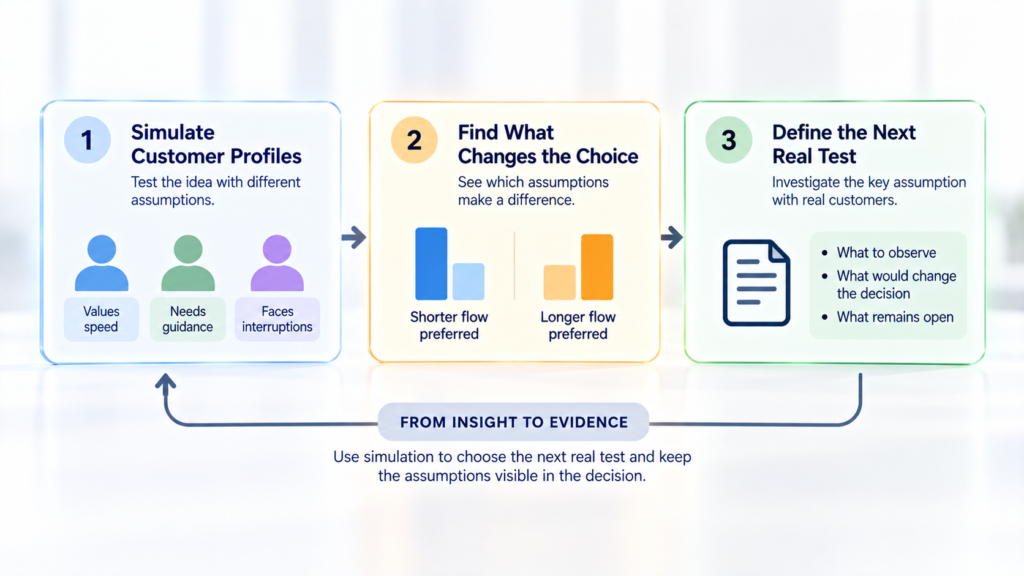 Simulated responses can reveal which customer assumptions deserve attention. Their business value depends on turning that exploration into a question that evidence from real customers can help resolve. The customer… Read more: Use Synthetic Customers to Find the Next Real Test
 - Waiting Can Change What Is Still Possible
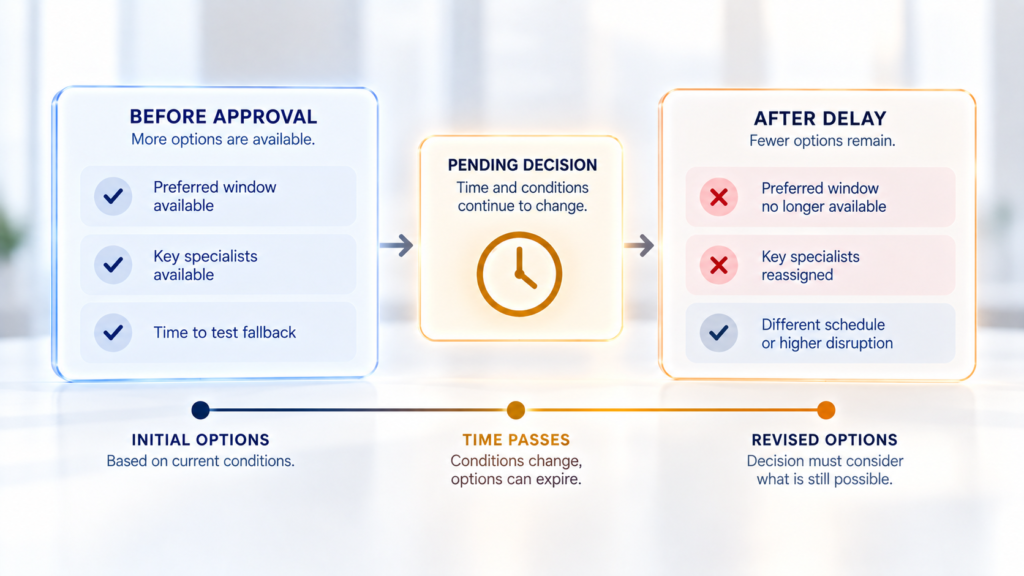 A pending decision can lose options as conditions change. Useful deliberation considers both the information waiting may provide and the alternatives it may remove. The calendar can alter the choice… Read more: Waiting Can Change What Is Still Possible
 - Return on Intelligence Belongs to the Whole Task
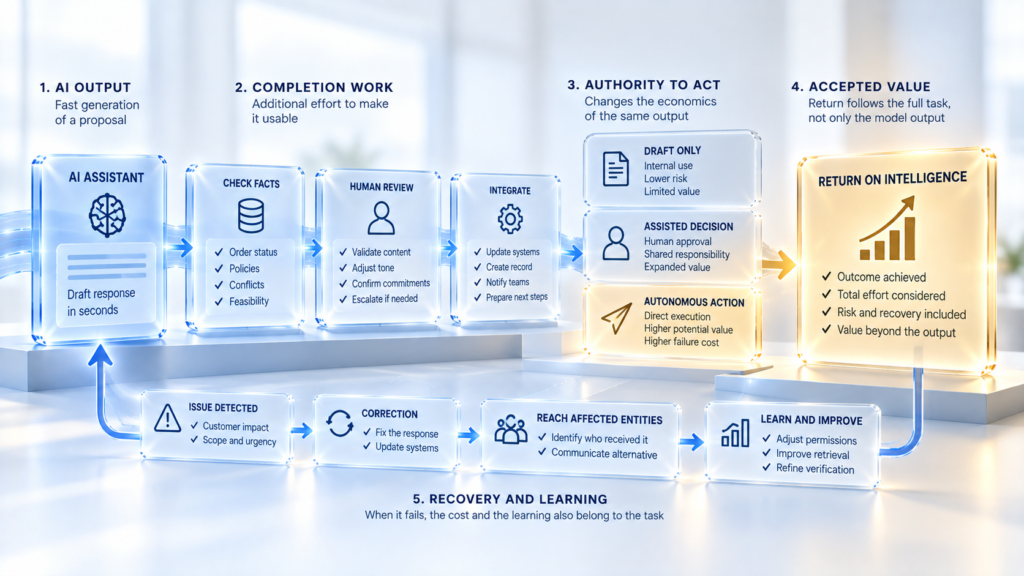 Return on Intelligence follows AI capability into accepted value. Its economics depend on the full work required to make a result usable, the authority granted to act on it, and… Read more: Return on Intelligence Belongs to the Whole Task
© 2026 Trajecta Ltda. All rights reserved. · Brazil · Books, Research Publications & Editorial Projects